Lingua

Ottieni una citazione
Ottieni una citazione
 Casa / Notizia / Notizie del settore / Electrical Welding Machine Selection Guide | Types, Power & Buying Tips
 2026.09.03
 Notizie del settore
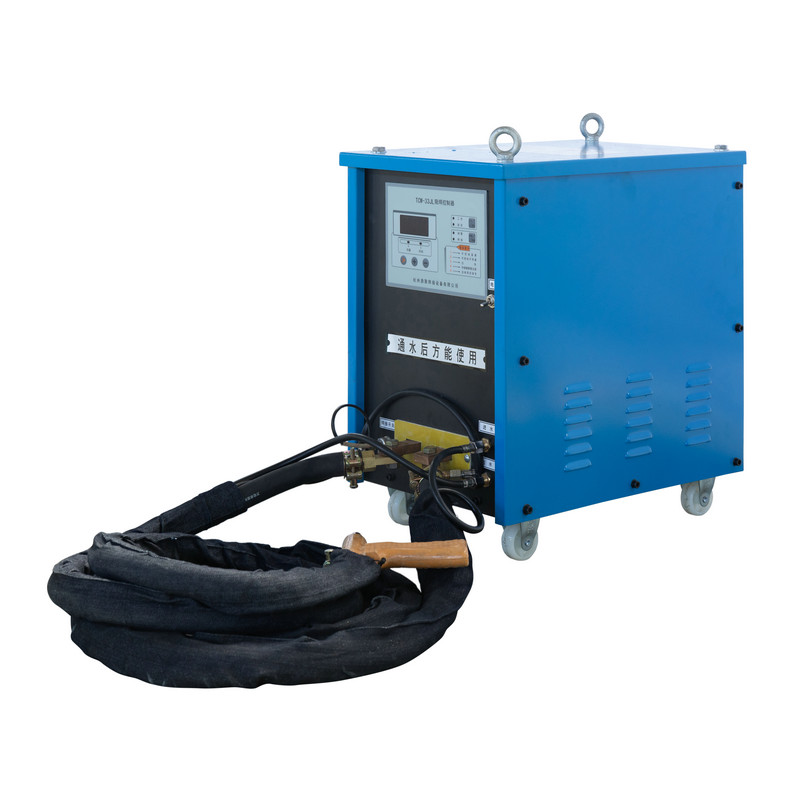
Every weld is a production decision. When you choose an electrical welding machine, you are really choosing how to balance weld quality, cycle time, and operator effort on your floor. After building resistance welding equipment for years, we have seen the same pattern: buyers who first define their material thickness, daily output, and electrode budget end up with a machine that pays for itself; buyers who skip that step often end up with a unit that either lacks power or costs too much per weld. This guide covers the spec numbers that matter, the machine types that fit different shops, and the factory checks that prevent post-purchase surprises.
An electrical welding machine works by passing current through electrodes and the workpiece to form a weld nugget. The workpiece sits between copper alloy electrodes, and the machine applies mechanical force to create electrical contact. Then a high current flows for a very short time. The resistance at the joint creates heat, and the metal melts and fuses.
At its core, the machine includes a transformer, a control system, electrodes, and a mechanism for applying pressure. Each one of these parts affects the final weld.
| Machine Series | Rated Parameter | Drive Type | Best Fit |
|---|---|---|---|
| DN1 Gear-Type Pedal | 16 kW | Foot pedal | Low-volume thin sheet work |
| DTN2 Pneumatic | 75 kW | Pneumatic | Medium-gauge repeatable jobs |
| DZN-100 Mid-Frequency | 100 model | Pneumatic | High-quality controlled welds |
| DR1 Energy Storage | 1000 J | Pneumatic | Precision fast welds on sensitive materials |
Buyers often confuse kW with weld quality. In resistance welding, control quality matters more than raw power. A 75 kW machine with poor current control can produce worse welds than a 50 kW machine with a precise controller.
Always compare machines on the same terms. kW ratings mean nothing if the duty cycle is different. Joules mean nothing if the weld time is not adjustable. Ask for a complete specification, including cycle time and electrode force, before you compare numbers.
The right electrical welding machine depends on your volume, material, and operator experience. Here is how common machines fit different floors.
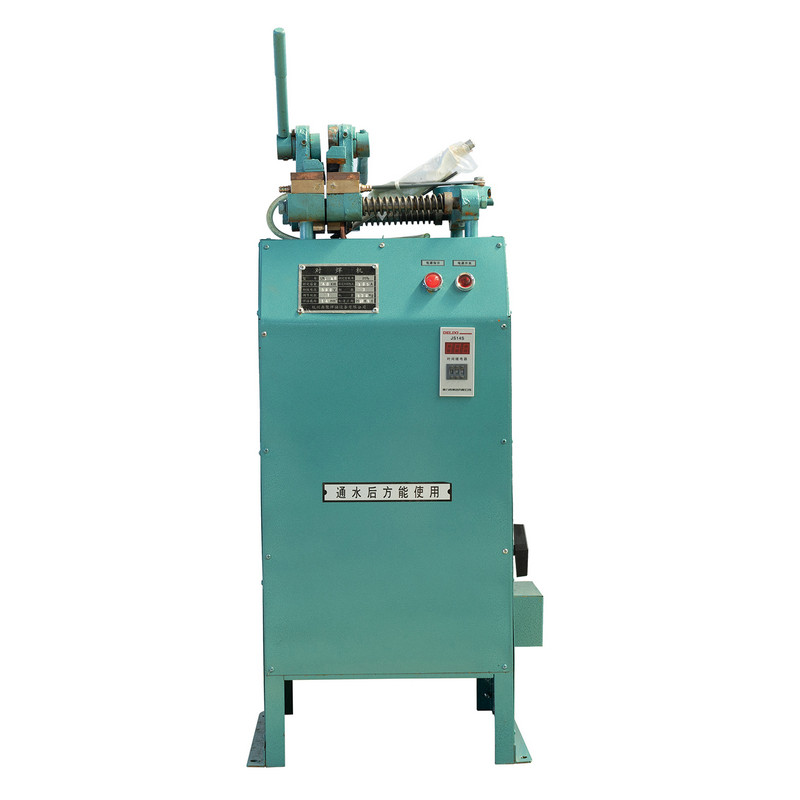
Foot pedal machines remain popular because they are simple, low cost, and easy to maintain. They suit small shops that weld mild steel sheets up to medium thickness. For a shop with modest output, a DN1 16 kW gear-type pedal spot welding machine provides manual pressure control and a clean, repeatable joint. The operator controls the pressure by stepping on the pedal, which gives immediate feedback for setup jobs and repair work.
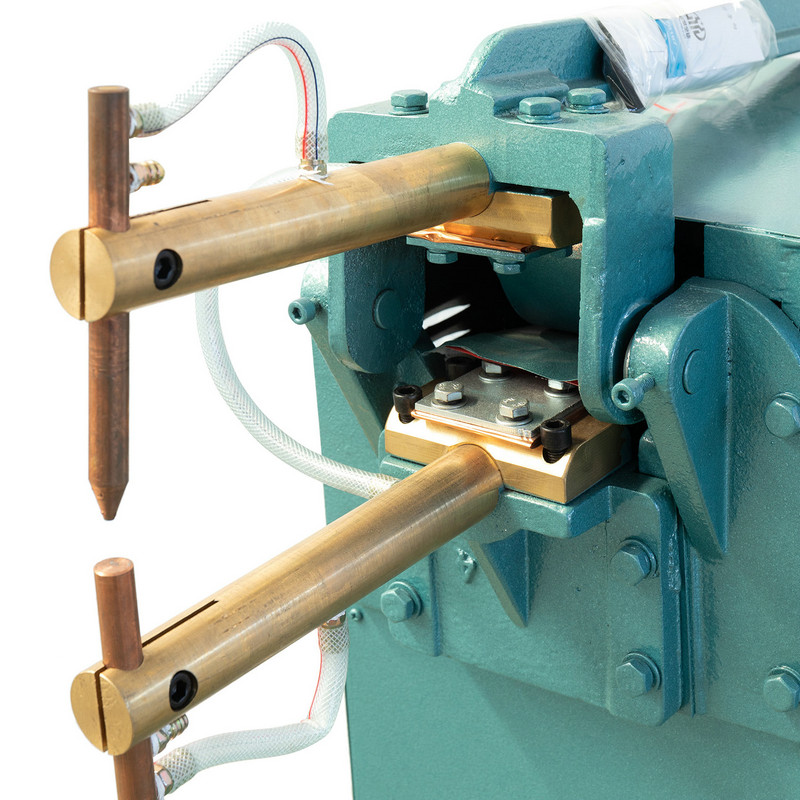 DN1-16KW Gear-Type AC Spot Welding Machine for Manual Pressure Control This compact gear-type welder offers high power with low no-load current, using a thyristor switch circuit for precise timing. It suits small shops welding mild steel up to medium thickness, providing manual pedal control for setup and repairs. View Product →
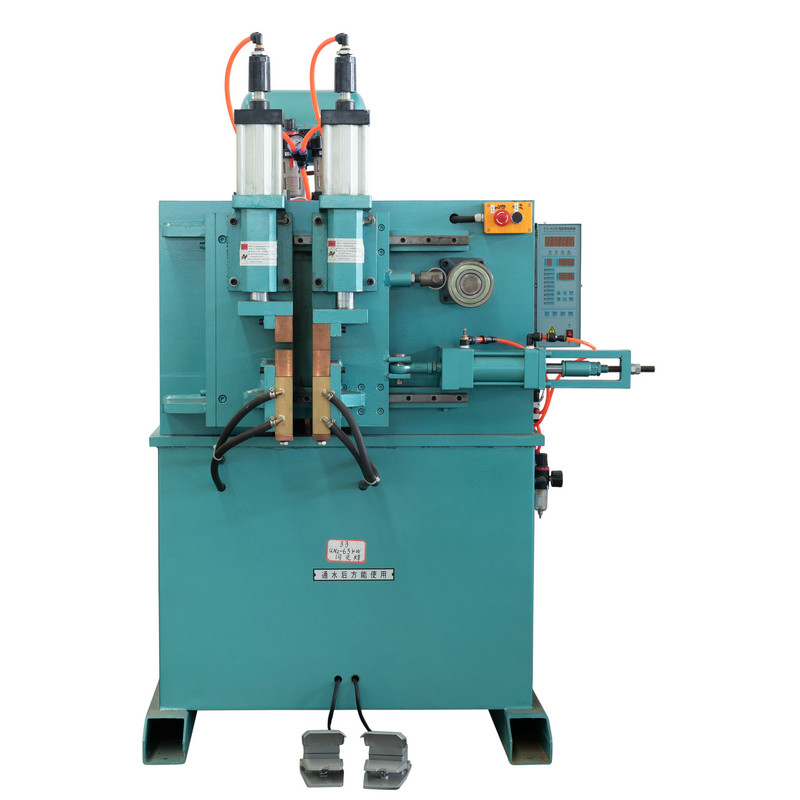
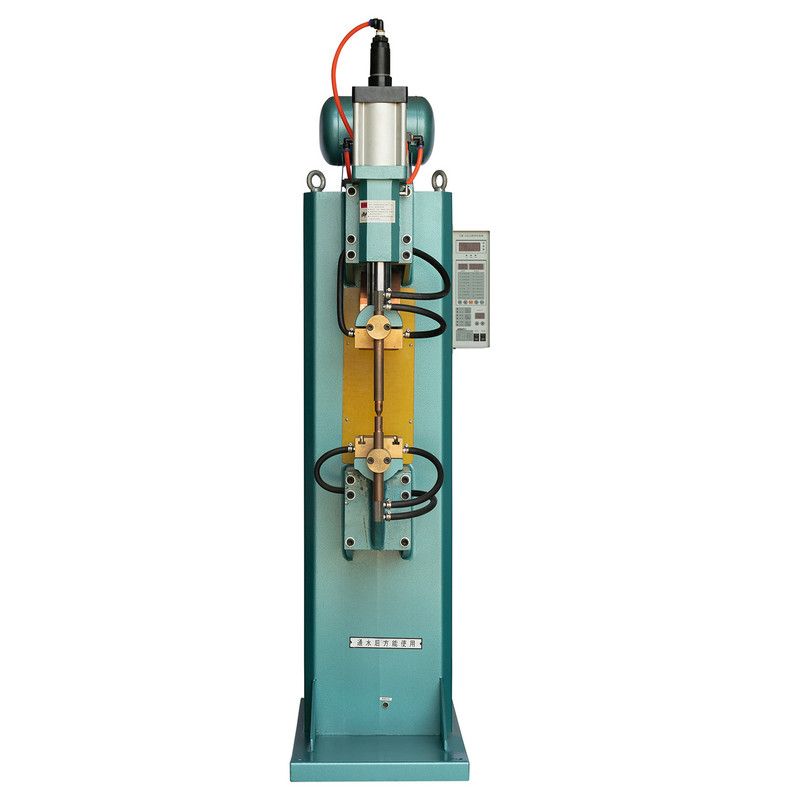
 Once you add a pneumatic cylinder, the operator no longer needs to maintain consistent hand pressure. Pneumatic machines deliver uniform electrode force every cycle, which improves consistency when you run hundreds or thousands of welds per shift. The DTN series is the standard choice for medium-gauge fabrication. If your production schedule includes frequent runs of the same part design, a pneumatic machine removes the human variance from the equation.
Mid-frequency inverters deliver a faster, more controlled current ramp than traditional AC machines. The result is a more uniform weld nugget and less electrode wear. For galvanized, coated, or high-strength steel, the DZN-100 mid-frequency spot welding machine provides better weld consistency. The control system also responds faster, which helps when welding materials that have variable surface conditions. You can read more about why mid-frequency and variable-frequency designs outperform traditional methods in this technical comparison .
 DZN-100 1000 Hz Medium Frequency Spot Welder with Touchscreen Control The DZN-100 operates at 1000 Hz, boosting secondary inductance for welding thick and highly conductive metals like aluminum and galvanized steel. Touchscreen control shows real-time current and alerts faults, ideal for demanding production environments. View Product →
 Energy storage machines release a very short, high-current pulse. They are ideal for small parts, thin materials, or components that cannot tolerate long heat input. A DR1 1000 J pneumatic energy storage spot welder is a practical choice for precision metalwork where heat input must stay tightly controlled. Because the stored energy discharges in milliseconds, the weld zone receives a concentrated pulse without an extended heat-affected zone.
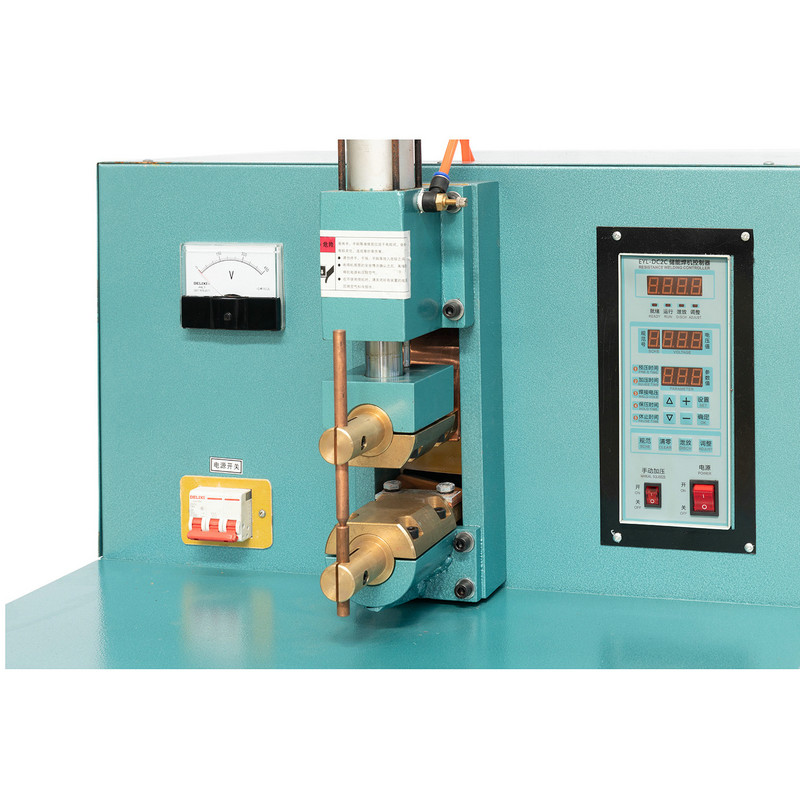 DR1-1000J Pneumatic Capacitor Energy Storage Spot Welder This capacitor discharge welder delivers a short, high-current pulse, minimizing heat input and deformation. It independently adjusts preload, discharge, and forging parameters, making it suitable for precision parts like silver contacts and thin metals. View Product →
 Before you compare price lists, verify four things: the factory, the transformer, the cooling system, and the accessories.
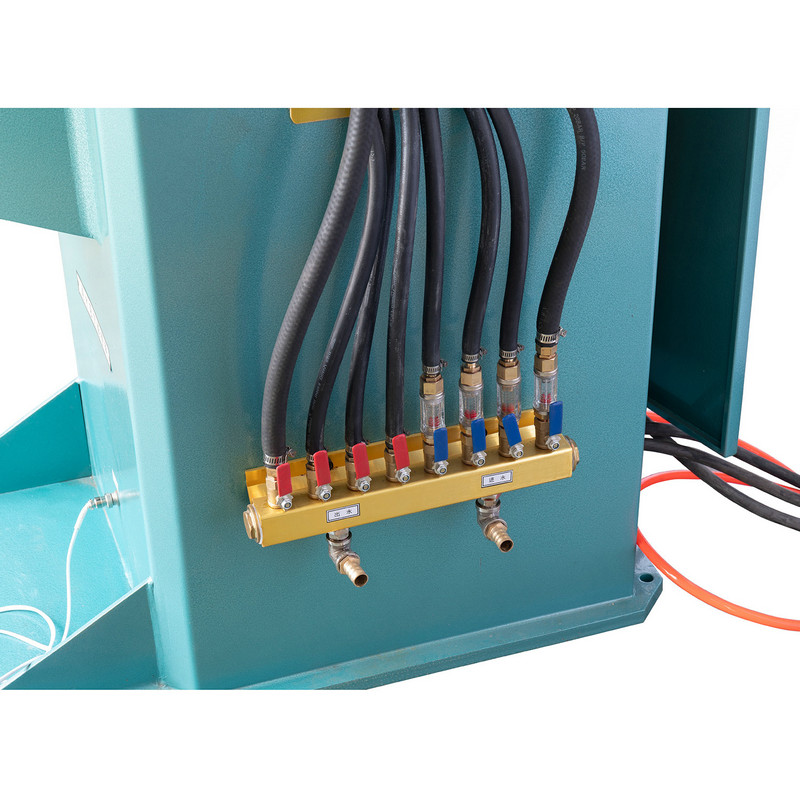
Duty cycle is often the number that separates a good machine from a bad experience. If your machine runs 60 seconds of welding out of every 100 seconds, that is a 60% duty cycle. Many heavy production shops need 80% or more. That is why the cooling system is so important. A chiller keeps the transformer and electrode holder at a stable temperature, allowing the machine to sustain high output.
Once you have these answers, you can make an informed decision. A detailed step-by-step approach to choosing the right industrial spot welding machine covers the full checklist you need.
If your machine is rated at 50% duty cycle, it can only weld half the time. Match the duty cycle to your production schedule. A machine that is rated for lower duty will slow down your line.
A spot welder without a chiller will overheat under sustained load. Many buyers add an industrial chiller from day one to avoid expensive downtime later.
Electrode tips wear and need dressing or replacement on a schedule. A factory that supplies electrodes, copper rods, and controllers from the same source gives you one point of accountability and faster spare part delivery. As a rule, check electrode tips at the start of every shift and dress them after every 100 to 200 welds, depending on material.
AC machines are simpler and cheaper. DC machines, including mid-frequency and energy storage designs, provide better current control and consistent heat output, especially for coated or high-strength materials.
Start with your material thickness. For thin sheets up to 1.5 mm, a 16–25 kW pedal or pneumatic machine will work. For thicker material, you will need 50 kW or more. Send your material specification to a manufacturer for an exact recommendation.
Yes, but electrode pressure and current control matter more with stainless steel because it has low thermal conductivity and a tendency to stick to the electrode. A mid-frequency or energy storage machine gives you a more reliable weld.
Ask for duty cycle, transformer coil material, cooling method, electrode spares, and reference cases. In a B2B purchase, these five answers reveal whether the supplier is a factory or just a trading company.
Electrode lifespan depends on material, current, and cooling. Copper alloy electrodes can last several thousand welds on mild steel, but coated materials will wear them faster. Keep a spare electrode set on hand to avoid unplanned production stops.
The right electrical welding machine is the one that fits your material, your cycle time, and your maintenance team. Start with the spec sheet, then verify the factory and spare parts, and choose a machine that can handle tomorrow’s workload—not just today’s quote. If you are still deciding between machine types, send your material drawings and production volume to a manufacturer. A responsible factory will recommend a model with a margin of safety rather than the largest unit it can sell.
Prodotti consigliati

Prodotto
Informazioni di contatto.
+86-152-5712-5882
Fax: +86-563-2269966
N. 21 GUANGPING ROAD, GUANGDE Economic Development Zone, città di Guangde, provincia di Anhui
Codice QR